Climbing plants
Wrought-iron garden obelisk for climbing plants
Wrought-iron garden obelisk sized for climbing roses, clematis and wisteria — height, bar spacing and fixing matched to the weight of a mature plant.
Get a quote →The available heights
1.4 – 1.8 m
Clematis
Light plant, a fine structure is enough.
1.8 – 2.2 m
Climbing rose
The most common use, adjust to the rose's vigour.
2.0 – 2.4 m
Wisteria
Heavy once established, needs the sturdiest structure.
A standard garden-centre stake bends or buckles under the weight of a climbing rose or wisteria once the plant is established. A wrought-iron obelisk built to order is sized from the outset to carry that weight for years, with bar spacing designed for the plant to grip naturally.
Which plant
The best plants for an obelisk
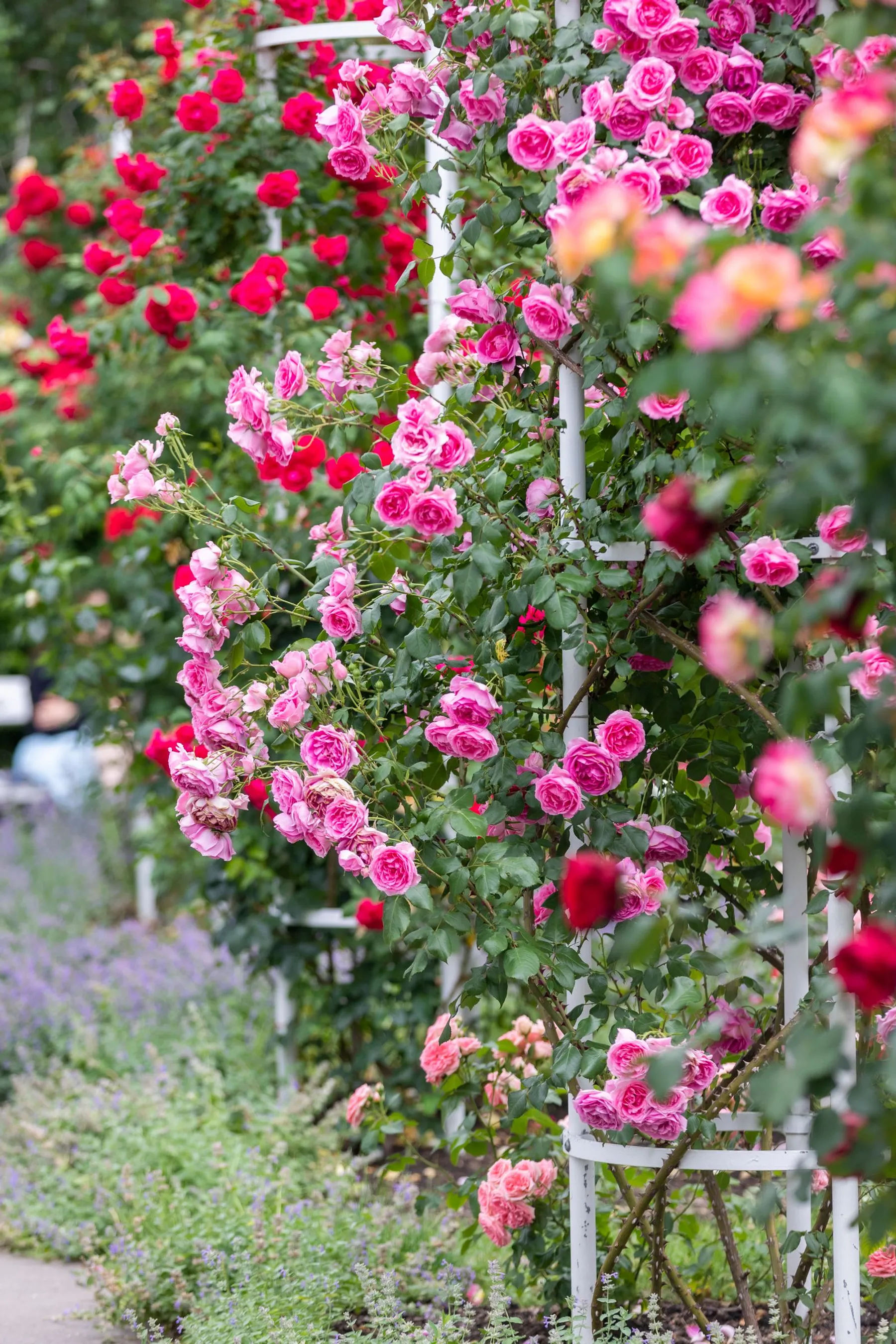
Climbing roses
The most common use: a structure able to carry the weight of a mature plant over several years.
Clematis
A lighter plant that naturally wraps itself around a fine structure like an obelisk's bars.
Wisteria
Vigorous and heavy once established; deserves the sturdiest structure and the most generous height.
Honeysuckle, sweet peas
Lighter or seasonal plants, well suited to a more modest format.
Material
What sets wrought iron apart from a garden-centre stake
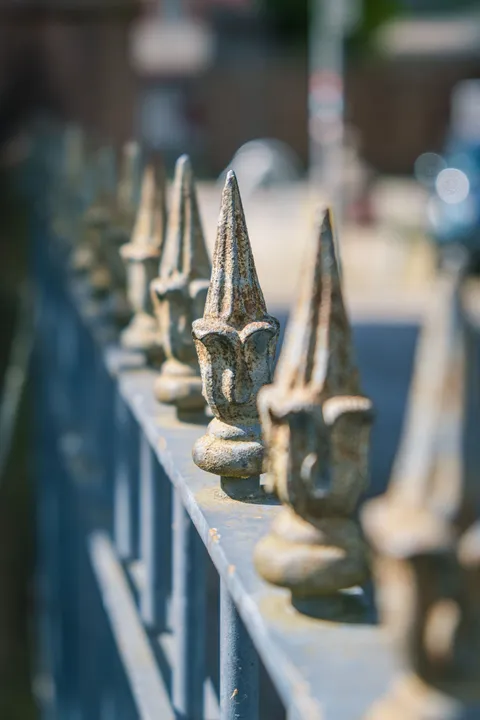
A properly protected piece — galvanising followed by powder coating, or a duplex system combining both — holds up outdoors for years with very little upkeep, unlike a raw or simply painted steel stake that starts rusting as soon as the protective layer is scratched.
Material
A section matched to the plant's weight
The heavier the plant once mature, the thicker the iron section needs to be to hold up over time without bending.
| Fact | Detail |
|---|---|
| Square bar, 10 to 16mm | A lighter clematis is fine at the lower end of that range, while a mature wisteria, considerably heavier, calls for the upper end. Reference points from traditional ironwork, confirmed in your quote based on your plant. |
| Hot-dip galvanising | Standard EN ISO 1461, alone or combined with powder coating — the structure holds up outdoors for decades. See our installation and care page. |
For comparison
What you'll find at a garden centre for a climbing plant
- €18.50 — an 80cm trellis stake, thin powder-coated steel.
- €34 — a modular obelisk structure, also in steel.
- €50 — a 120cm conical stake, the top of this segment.
No climbing plant in mind?
The obelisk also works without one
See our large-format decorative obelisk page, designed as a standalone piece, singly or in pairs.
Frequently asked questions
What people ask us most
Can an obelisk carry an already-mature climbing rose?
Yes, provided the structure is sized for that weight from the design stage — worth mentioning at the quote stage, along with the plant's current age and size.
Does the plant need to be tied to the obelisk?
At first, yes, until the plant grips the structure on its own. A clematis wraps itself quickly; a climbing rose needs to be trained (tied in) for the first few seasons.
Can several matching obelisks be ordered for the same bed?
Yes, that's a common request.
Does a wrought-iron obelisk rust from regular watering?
Not if properly protected: hot-dip galvanising (standard EN ISO 1461), alone or combined with powder coating, generally holds up outdoors for several decades according to industry technical sheets, watering included.
Contact
Describe your project
The workshop replies with a first estimate within 48h.