Large format
Wrought-iron garden obelisk, large decorative format
Large-format wrought-iron garden obelisk, designed as a standalone architectural piece — singly or in pairs, for a classical garden or an avenue.
Get a quote →The available compositions
Single piece
A focal point at the end of a vista or at the centre of a bed.
In pairs
On either side of a path, gate or entrance — the most classical use of the motif.
In a row
Beyond two pieces, to punctuate an avenue at regular intervals.
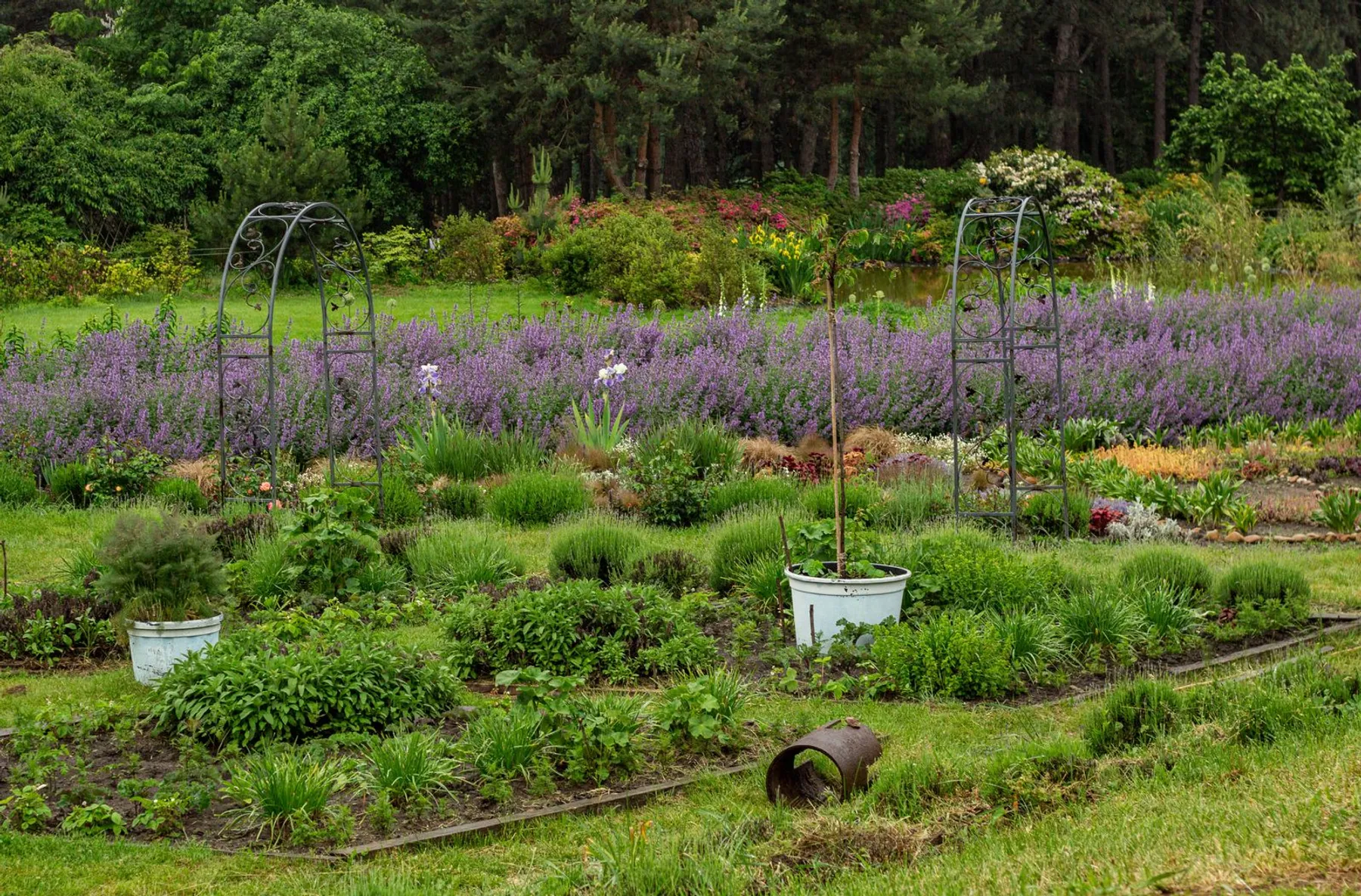
An obelisk doesn't need a climbing plant to earn its place in a garden. Left bare, it works as a vertical focal point — a silhouette that structures a view, marks the start of a path, or closes off a bed, in the spirit of classical French gardens where the obelisk is an architectural motif in its own right.
Format
A bigger format than a plant-support obelisk
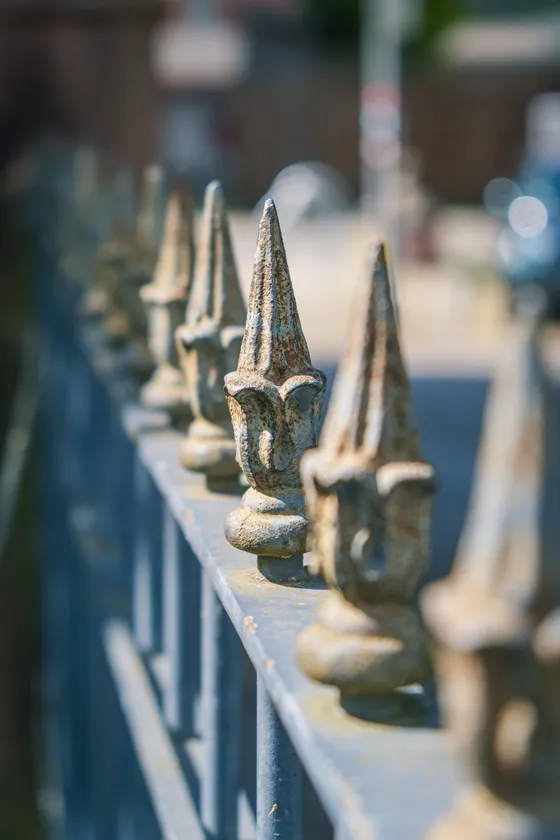
With no plant to carry, a decorative obelisk can take on a bolder scale — a wider base, a more generous height, a more elaborate finish (a worked finial, gold-leaf detailing on the tip) — since its job is precisely to be seen, not to stay discreet behind foliage.
Material
A thicker section for a bolder scale
A taller, wider decorative format needs a thicker iron section than a compact plant-support obelisk, to stay stable without an oversized anchor.
| Fact | Detail |
|---|---|
| Square or flat bar | Load-bearing elements most often run 10 to 16mm across in square bar, scrollwork in flat bar 16 × 6mm to 20 × 8mm — reference points from traditional ironwork training (CAP Ferronnier), confirmed in your quote based on the height chosen. |
| Rust protection | As with any outdoor piece, hot-dip galvanising (standard EN ISO 1461), alone or combined with powder coating, matters as much as the raw material — see our installation and care page. |
For comparison
What you'll find elsewhere, in large format
A set of three 222cm iron plant stands, at a major garden retailer — still steel, not solid wrought iron.
On the secondhand and antiques market, a pair of old wrought-iron obelisks, depending on age, size and condition.
A project with a climbing plant?
See the climbing-plant obelisks
Sized to carry the weight of a mature rose, clematis or wisteria — see our obelisk for climbing plants page.
Frequently asked questions
What people ask us most
Can a decorative obelisk take a climbing plant later?
Yes — nothing stops you from adding a climbing plant to an obelisk originally chosen as a standalone piece; the structure supports both uses.
How many obelisks to line a path?
That depends on the path's length and the spacing you want between each piece — worth discussing at the quote stage with your garden's dimensions.
Does the large format need a different fixing method?
A bolder scale generally needs a sturdier anchor than a small plant-support obelisk.
What's the difference between a new large-format obelisk and an old secondhand piece?
An old piece has its own patina and history, but variable condition and no guarantee of sturdiness; a new made-to-order obelisk is sized for its intended use (single or in a pair) and its rust protection is guaranteed from delivery.
Can I order a single piece rather than a pair?
Yes — a single piece works well as a focal point, at the centre of a bed or at the end of a vista. A pair remains the most classic use for framing an entrance or path, but it isn't a requirement.
Contact
Describe your project
The workshop replies with a first estimate within 48h.