Gardening
Which climbing plant should you choose for your obelisk
Rose, clematis, wisteria, honeysuckle: each climbing plant has its own growing needs and structural demands. The guide to choosing the right one.
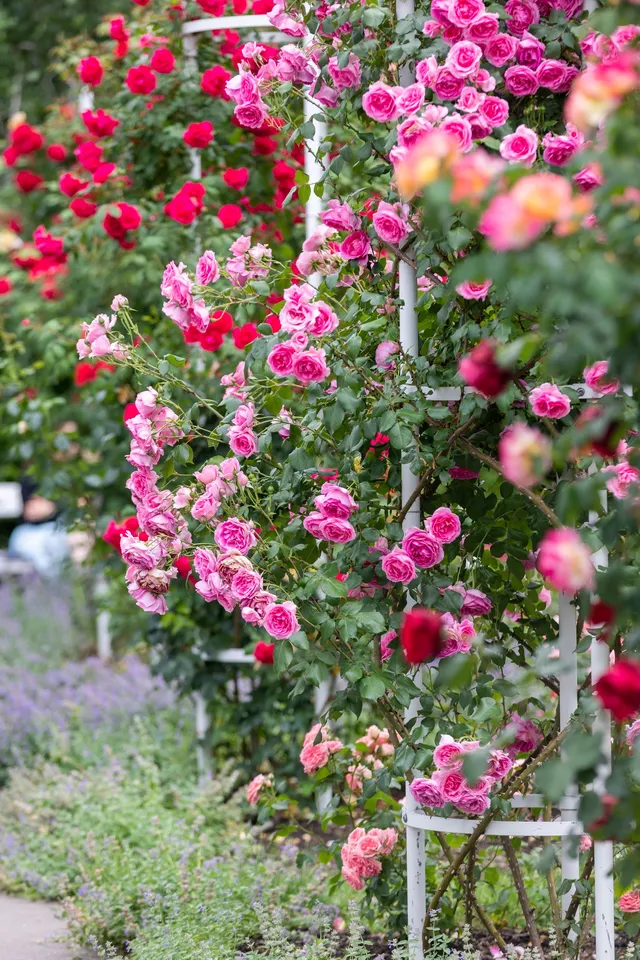
Not all climbing plants behave the same way on an obelisk — some grip on their own, others need tying in; some stay light, others get heavy within a few years. The choice of plant matters as much as the structure itself.
Climbing rose: the most common, the most demanding to train
With no tendrils or suckers, a climbing rose must be tied in and trained to cover the obelisk’s full height, or it will only flower at the top. It wants full sun and well-drained soil. See our article on training a climbing rose onto an obelisk for the detailed method.
Clematis: light and self-sufficient
Clematis naturally wraps around a fine structure using its leaf stalks, without heavy training — the easiest plant to pair with an obelisk. The well-known gardening saying about it holds: “feet in the shade, head in the sun” — the base of the plant likes protection from direct heat (via mulch or a low companion plant), while the climbing foliage seeks light.
Wisteria: the most vigorous, the most demanding on structure
Once established, wisteria becomes heavy and powerful — it deserves the sturdiest structure and the most generous height among common obelisk plants. Its vigorous growth also needs regular pruning to stay under control, or it can distort an undersized support.
Honeysuckle and sweet peas: for a more modest format
Lighter plants, often seasonal for sweet peas, well suited to a small-format obelisk or a structure already occupied by another plant as a complement.
A quick reference table
| Plant | Self-clinging? | Weight at maturity | Recommended structure |
|---|---|---|---|
| Climbing rose | No, needs training | Medium to heavy | Reinforced obelisk |
| Clematis | Yes | Light | Simple obelisk |
| Wisteria | Partially, needs guiding | Heavy | Reinforced, tall obelisk |
| Honeysuckle | Yes | Light | Simple obelisk |
| Sweet peas | Yes (tendrils) | Very light, seasonal | Simple obelisk |
Frequently asked questions
Which climbing plant is easiest for a beginner?
Clematis, which wraps itself around the structure without heavy training, is generally the simplest to pair with an obelisk.
Can two climbing plants share the same obelisk?
It’s possible, especially a lighter plant (clematis, sweet peas) alongside an already-established climbing rose — worth discussing based on each plant’s relative vigour.
Can wisteria damage an obelisk that’s too light?
Yes — a mature wisteria exerts significant weight and pressure on its structure; an undersized obelisk can distort over time.
Read next