
Installation
Installing an obelisk: three methods depending on your ground
Buried sleeves, bolted base plates, direct concrete footing: the right choice depends mostly on your ground type and the stability you need.
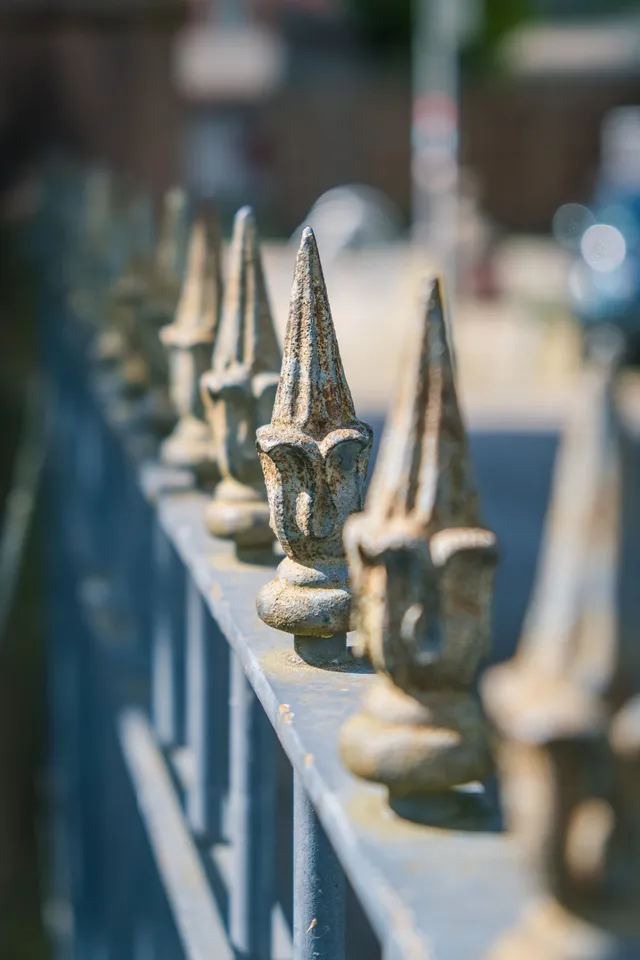
How you fix an obelisk depends first on the ground available — lawn, paving, open soil — not on aesthetic preference. Three methods cover most situations.
Buried sleeves — for lawns and soil beds
Metal tubes are set into the ground; the obelisk’s feet slot into them and lock in place, without being permanently fixed. The main advantage: the obelisk can be removed without damaging the bed — useful for overwintering a fragile piece or reorganising a border. This is the most common method for a climbing-plant obelisk set in open soil.
Bolted base plates — for a slab or patio
On a hard surface (concrete, paving), a base plate at the obelisk’s foot is fixed with mechanical or chemical anchors. Quick to install, reversible without masonry work — but stability depends entirely on the quality of the paving and the number of fixing points. A properly sized plate with several anchor points limits the risk of tipping in the wind.
Direct concrete footing — for maximum stability
The obelisk’s feet are set into poured concrete in open soil. This is the most stable method, recommended for a large-format piece or a very windy spot — but also the most permanent: moving an obelisk set this way means breaking up the concrete footing.
An often-overlooked point: the plant’s future weight
A common mistake is choosing the fixing method based on the bare obelisk, without anticipating the weight it will carry once the plant has grown. A mature wisteria, in particular, adds considerably more load and wind resistance than the obelisk alone — worth planning for at installation rather than fixing after the fact.
Frequently asked questions
Which method should I choose for a soil bed?
Buried sleeves suit most climbing-plant obelisks; a direct concrete footing is better for a large-format piece in a very windy spot.
Can an obelisk be moved after installation?
With buried sleeves or bolted base plates, fairly easily. A direct concrete footing makes moving it much harder.
Should I plan for the plant’s weight at installation time?
Yes — a mature climbing plant (wisteria especially) adds significant weight and wind resistance compared with the bare obelisk, worth factoring into the choice of fixing method.
Read next